

If you have ever stared at your AdSense dashboard wondering why your site was not approved, you are not alone. I have watched friends lose weeks over a missing Privacy Policy page and seen others get rejected for low value content even with fifty posts stacked up. The truth is that Google AdSense requirements are not mysterious, but they are strict. This Google AdSense Approval Checklist breaks down exactly what you need to pass review in 2026, from original content and policy compliance to basic site trust. You do not need huge traffic. You do not need a fancy design. You do need to meet the eligibility rules and show Google your site is real, useful, and safe.
You can also read: How Bloggers Build Six-Figure Online Businesses in 2026
This guide walks you through the exact Google AdSense approval checklist, explains AdSense eligibility, and shows you how to get AdSense approval without guessing. If you want to know how to monetize a blog with AdSense, you first need to understand why so many applications fail before they even reach the review stage. Most rejections are avoidable if you understand what Google is actually looking for and follow a clear Google AdSense approval checklist 2026.

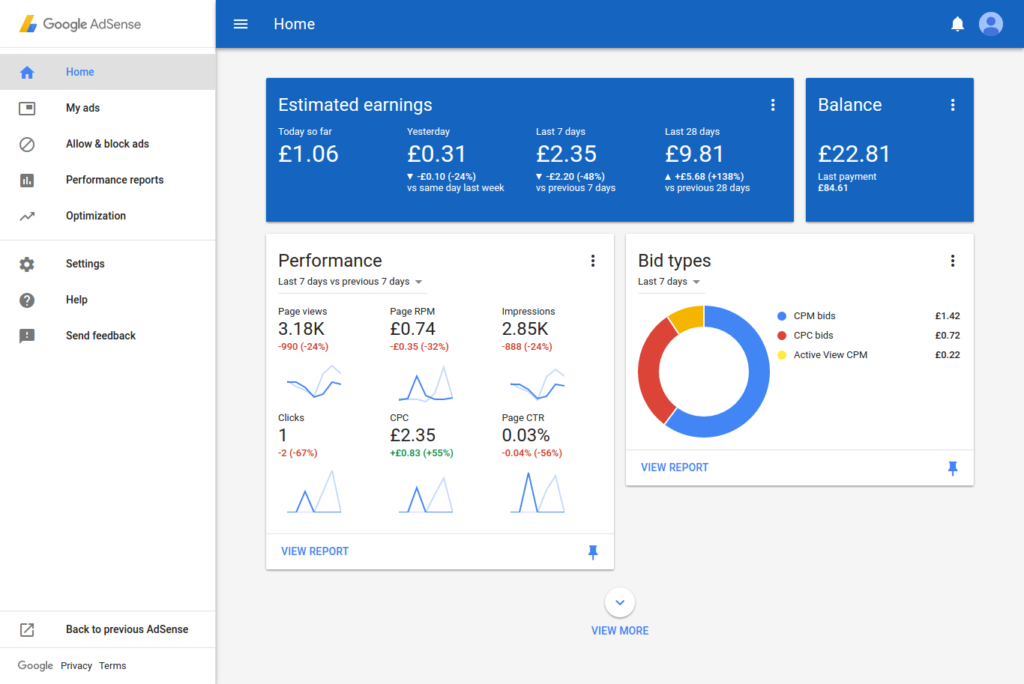
Google AdSense Approval Checklist: What Google Actually Requires for AdSense Approval
Google’s own eligibility page says it simply. If you have your own content that meets their policies and you are eighteen or over, you can sign up for AdSense. That is the core. The official guidance states that your content must be high-quality, original, and attract an audience, and you must comply with the AdSense Program policies at all times. You must be at least eighteen years old or have a parent or guardian sign up on your behalf, and you must be able to access the HTML source code of the site you submit. These are not suggestions. They are rules that show up again and again when publishers get rejected.
The core AdSense eligibility requirements in 2026 include original, high-quality content that is unique and helpful, not copied or thin. You must be eighteen or older, comply fully with AdSense Program policies, own the site and be able to add the AdSense code, secure your site with HTTPS, make it mobile-friendly, and ensure pages load fast enough to provide a decent user experience. AdSense website requirements are not about perfection. They are about basics done well, and Google expects you to understand AdSense policies before you apply.
Many publishers ask how many blog posts are needed before applying for AdSense. Google does not officially say you need twenty posts or three hundred visits. That is crucial. Community reports and real publisher experiences give us a clear pattern. Most publishers who get approved in 2026 have fifteen to thirty detailed, original articles that are around eight hundred to fifteen hundred words each. Content should answer real questions in a specific niche and avoid large amounts of thin or auto-generated pages. You do not need one hundred posts. Five to ten very thin posts rarely cut it. A good rule of thumb is to aim for at least fifteen solid posts before you apply. Each post should solve a real problem, not just exist to fill space. Avoid pages that are mostly links, ads, or short click here posts. If you are asking how to get approved for AdSense in 2026, quality beats quantity every time. Your goal is to show Google that your site has depth and that you write with expertise in a clear topic area.
Traffic, Indexing, and Why Some Sites Get Approved Without Visitors
Many beginners think they need thousands of monthly visitors. They do not. Google does not officially require a minimum traffic number for AdSense approval. You can get AdSense approval without traffic, as long as your site is indexable by Google Search Console, public and crawlable without login walls or CAPTCHAs blocking bots, and filled with original content that follows AdSense policies.
You may also be interested in: How Much AdSense Pays Per 1000 Views
That said, having some organic traffic helps. It shows Google your site is real and useful. If you have been publishing for months and still have zero visitors, you may want to fix basic SEO before applying. AdSense traffic requirements explained simply means that traffic should be organic and legitimate, not bought or bot-driven. Avoid sudden spikes from suspicious sources because Google monitors invalid traffic closely. If you are new, focus on content and indexing first. Traffic will follow if you do SEO right and stick with it.
New websites can get approved for AdSense, but it is harder if they have only a few posts, content looks generic or thin, or there is no clear niche or purpose. Community reports suggest that having fifteen to thirty detailed articles significantly improves approval chances, even if your site is only a few months old. Best practices for new sites include picking a clear niche such as budget travel, student study tips, or home fitness, publishing consistent, high-quality posts for at least four to eight weeks, setting up Google Search Console and Google Analytics to monitor indexing and traffic, and ensuring your site is mobile-friendly and fast-loading. New does not mean untrustworthy. It just means you have to prove value quickly.
AI Content, Low Value Content, and Why Rejections Happen
One of the biggest questions these days is whether AI-generated content can get approved by AdSense. This is a big one. You might have heard that AI content is automatically rejected. That is not quite true. Google does not ban AI content by default. What they ban is low-value, unoriginal, or policy-violating content, whether written by a human or AI. AdSense approval for AI content is possible if the content is edited and improved by a human, adds real value, not generic fluff, follows the AdSense content policy explained in their program policies, and does not copy other sites or spin articles.
If you use AI tools, treat them as assistants, not ghostwriters. Rewrite and expand AI drafts. Add examples, personal insights, and real data. Make sure each article answers a real question better than competing pages. If you are worried about why AdSense rejected my website, check whether your posts look like mass-produced content. That is a fast track to low value content rejection. Your best path is to use AI as a starting point and then invest time in making the content genuinely useful.
Low value content is the most common rejection reason. It is vague, but it usually means your content is too short or thin, articles are duplicated or very similar, pages do not offer real information or help, or your site looks like a placeholder or affiliate spam. The AdSense low value content fix starts with adding depth. Expand short posts to eight hundred to fifteen hundred words with clear headings, examples, and real explanations. Remove duplicate or auto-generated pages and delete or noindex pages that are just lists of links, product catalogs, or spun content.
Improve structure by using clear headings, short paragraphs, and images to make content readable. Show expertise by adding an About page that explains who you are and why you write about this topic. This builds E-E-A-T, which stands for experience, expertise, authoritativeness, and trustworthiness. Check internal linking so your posts link to each other logically, not just to external sites or ads. If you keep getting rejected, treat your site like a magazine. Would you pay to read it? Would you trust it? If not, keep improving before reapplying.

Site Setup, Domain Choice, and Essential Pages That Matter
You do not strictly need a custom domain to get AdSense approval, but it helps a lot. Free platforms like Blogger can be used with AdSense, and Google even supports this officially. However, custom domains like yourname.com look more professional and are easier to build trust with. A custom domain looks serious and credible, is easier to brand and market, is easier to move hosts later if needed, and is better for long-term SEO. Free subdomains are cheap or free to start and good for testing before buying a domain, and they are still eligible if you follow policies.
If you are serious about monetization, invest in a custom domain and affordable hosting like Hostinger, Bluehost, or SiteGround. These are widely used by beginner bloggers and AdSense publishers. WordPress is the world’s most popular CMS for building AdSense-ready websites and blogs, and it gives you full control over your site structure, design, and SEO. AdSense approval for WordPress websites is common because WordPress makes it easy to implement the best website structure for AdSense.
Google expects certain pages that show transparency and trust. These are not optional if you want a smooth AdSense approval. Essential pages include a Privacy Policy, which is required by law in many places and by AdSense policies, Terms and Conditions, which explains rules for using your site, About Us, which shows who you are and why you write, and Contact Us, which gives readers a way to reach you. These pages should be linked in your main menu or footer, easy to find, and written in clear language, not copied from another site. A good Google AdSense approval checklist 2026 always includes these pages.


Speed, Security, Design, and Hidden Technical Requirements
Website speed is not listed as a direct requirement, but it matters. Google wants fast-loading pages, good user experience, and mobile-friendly design. Slow sites frustrate users and crawlers. If your site takes five or more seconds to load, Google may see it as low quality. Improve speed by using a lightweight theme like GeneratePress, installing a caching plugin like WP Rocket, using a CDN like Cloudflare for speed and security, and optimizing images with tools like Canva to compress file sizes. Better speed means better user experience, which means better chances of approval and higher earnings later.
Security matters too. Your site should use HTTPS with a valid SSL certificate. Most modern hosts provide this for free. A secure site is a basic trust signal for Google and for visitors. Design also plays a role. Your site should have a clear navigation structure, no intrusive pop-ups that block content, and a layout that works well on phones and tablets. Google AdSense website design requirements are not about beauty. They are about usability and clarity.
AdSense approval for bloggers often comes down to whether your site feels like a real publication. If your homepage is a mess of ads, affiliate links, and thin content, Google will likely reject it. If your site is clean, fast, and focused on helpful content, your chances improve dramatically.

Policy Compliance, Age Rules, and Account Limits You Must Know
AdSense policies are strict. You must avoid adult content like pornography or explicit sexual material, illegal content such as drugs, weapons, or hacking, hate speech or harassment, dangerous or misleading content like fake health advice or scams, copyrighted material you do not own like movie downloads or pirated content, and clickbait or deceptive pages. All publishers must follow the Google Publisher Policies and the AdSense Program policies. If you are unsure, read the official policy pages in the AdSense Help Center. If your site has any of these, remove them before applying. One bad page can tank your entire application.
You must be at least eighteen years old to have your own AdSense account. If you are under eighteen, a parent or guardian can sign up using their Google Account. Payments will go to the adult responsible for the site, and the adult must meet all eligibility requirements. This is a hard rule, not a suggestion.
Google generally allows one AdSense account per person or entity. Having multiple accounts for the same site or same person can lead to account suspension, rejection of applications, or payment issues. If you have multiple sites, you can manage them under one AdSense account. You do not need separate accounts for each blog.
How long does AdSense approval take in 2026? Most publishers get a decision within a few days to two weeks. Some get approved in twenty-four to forty-eight hours. Others wait a month, especially if their site needs fixes. AdSense approval time 2026 is roughly one to three days for a fast approval on a clean site with strong content and everything in place, five to fourteen days for an average case, and two to four weeks for a slow case when Google needs to re-review after you fix issues.
The process has two parts. First is account approval, where Google checks your payment details, phone number, and address. Second is site approval, where Google checks your content and policies. Both must be approved before ads show. If your application is pending for more than a month, check your email for policy messages, check the AdSense Policy Center for issues, and make sure your site is still public and indexable. Patience matters, but so does attention to detail.
What Happens After Approval and How to Grow Earnings
Approval is just the start. To increase AdSense earnings after approval, publish more high-quality content consistently, target high-CPC niches like finance, tech, health, and business, use SEO plugins like Yoast SEO or Rank Math SEO to improve rankings, monitor performance in Google Analytics and Google Search Console, optimize ad placement with tools like Ad Inserter, and build an email list with Mailchimp or ConvertKit to bring back visitors. Do not chase clicks. Build trust and traffic. Earnings follow.
Many publishers focus only on getting approved and then stop improving. That is a mistake. AdSense monetization improves when you treat your site like a real business. Keep writing, keep optimizing, and keep learning.
You may also be interested in: How Much AdSense Pays Per 1000 Views
Your Complete Google AdSense Approval Checklist for 2026
AdSense Requirements Explained in 2026 is simpler than most people think. You need original content, policy compliance, and a basic level of trust. Nothing glamorous. Nothing impossible. If you are ready to move forward, set up your site on WordPress with a clean theme, publish fifteen to thirty solid posts in a clear niche, add your legal pages and double-check your policies, and apply for AdSense approval with confidence. Then keep writing, keep optimizing, and keep learning. Monetization is a marathon, not a sprint.
Before you hit apply, run through this mental Google AdSense approval checklist. Your site should have original high-quality content with fifteen to thirty detailed posts, be mobile-friendly, have fast-loading pages, use HTTPS or SSL, feature a clear navigation structure, include essential pages like Privacy Policy, Terms, About, and Contact, comply fully with AdSense policies, contain no copyrighted or prohibited content, demonstrate trust and expertise through E-E-A-T, and be owned by someone eighteen or older. If you check every box, your chances of AdSense approval go up dramatically.
This Google AdSense Approval Checklist is your roadmap. Follow it carefully, fix what needs fixing, and apply with confidence. Google AdSense approval is within reach if you treat your site like a real publication from day one.
If this guide helped you, share it with a friend who is trying to get AdSense approval. For deeper help on growing traffic, look into how to use Yoast SEO and Rank Math SEO to grow organic traffic, and check out our posts on best website structure for AdSense and AdSense approval for WordPress websites.